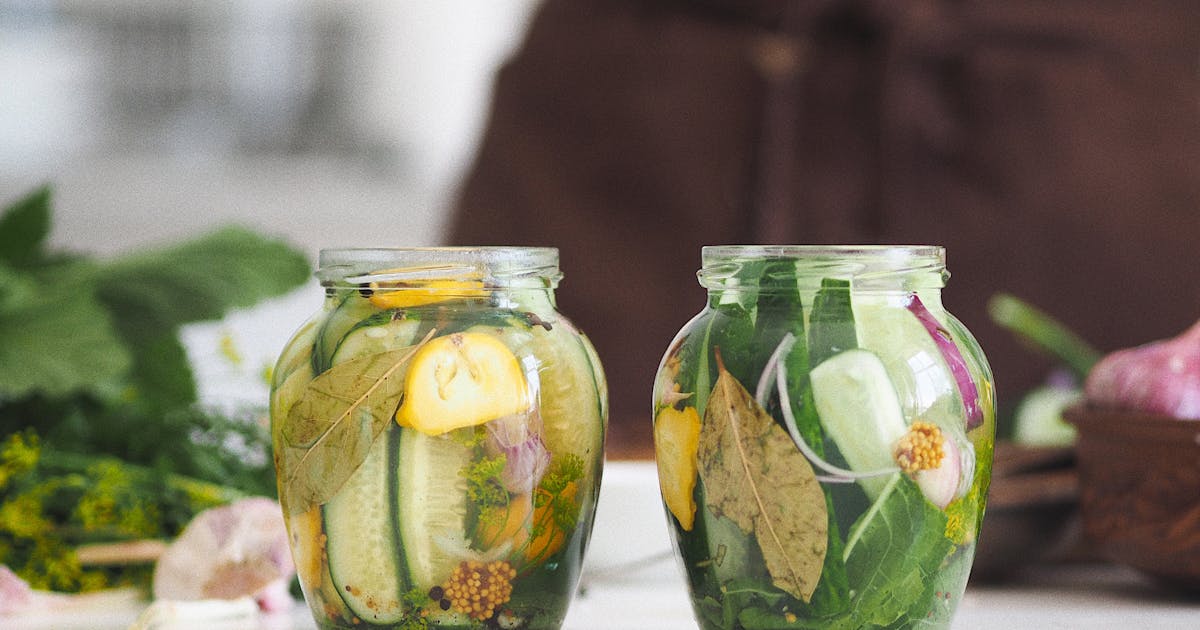
Why Do Your Jars Explode? Choosing the Right Salt for Home Canning
Every summer - the same story
Tens of thousands of home canners in Ukraine face the same problem every year: cucumbers go soft, cabbage develops slime, and jars explode right in the cellar. Recipes are time-tested, sterilization is followed - yet results are disastrous.
The cause often lies not in the canning technique, but in the most basic ingredient - salt.
Salt and canning: basic chemistry
Salt's action in canning is based on osmosis. NaCl creates a hypertonic environment where most pathogens cannot multiply. Lactic acid bacteria remain active and produce lactic acid that additionally protects the product.
Key requirement: salt must be as pure NaCl as possible. Any impurities can disrupt this balance. Canning requires salt with NaCl content of at least 97%, preferably above 98%.
The problem with sea and lake salt
Sea salt is produced by open-air evaporation. Along with NaCl, numerous impurities remain:
- Magnesium (MgCl₂) and calcium (CaCl₂) salts
- Potassium and sulfates
- Algae particles and organic residues
- Microplastics (found in 100% of sea salt samples)
But the main danger is chemical additives.
Potassium ferrocyanide (E536): the invisible enemy
After Ukraine's largest producer "Artemsil" shut down, supermarkets filled with imported salt - mainly Turkish and Egyptian. It pours perfectly, never clumps - but that's the warning sign.
The reason: anti-caking agent E536. In canning, it:
- Disrupts natural fermentation in brine
- Suppresses lactic acid bacteria
- Triggers uncontrolled putrid fermentation
- CO₂ accumulates - lids bulge or blow off
Comparison table
| Parameter | Rock salt (Romania, Poland) | Sea / lake (Turkey, Egypt) |
|---|---|---|
| NaCl content | 97-99.5% | 85-95% |
| Extraction | Mining from deep deposits | Open-air evaporation |
| MgCl₂, CaCl₂ | Minimal | Significant |
| Anti-caking (E536) | Typically absent | Frequently present |
| Microplastics | Absent | Found in 100% of samples |
| For canning | ✅ Ideal | ⚠️ Risky |
Rock salt: why depth means purity
Rock salt (mineral halite) formed 250-300 million years ago. Over this time, it purified itself from organics under immense geological pressure. Unlike sea salt, it doesn't contact modern pollutants. Mined from 42-300+ meter depths with only mechanical processing.
Practical recommendations
- Read the ingredients. Only NaCl. No E-additives.
- Avoid E535, E536, E538 - ferrocyanides that destroy fermentation.
- Skip iodized salt - iodine suppresses fermentation.
- Choose coarse grind (#1 or #2) - less likely to contain anti-caking agents.
- Prefer Romanian or Polish rock salt - EU standards, no chemical additives.
At soltis.com.ua - Romanian and Polish rock salt without additives. Wholesale prices from 5 bags.